- Things to consider before tackling that ugly job you despise.
 Years ago, my grandmother made the observation, "In everyone's life, you must eat a teaspoon of dirt." There is a lot of wisdom in this comment. Throughout our lives there are little jobs we are called upon to perform, be it at home, school, the office, or wherever, tasks we simply hate to perform. Whether you have been asked to do it or realize it is something you have to do of our own free will and accord, tasks you simply do not want to undertake. Maybe it's a job requiring physical skills and talents you simply do not possess, or maybe it's a "dirty job" involving unique situations that are not exactly the most sanitary, such as cleaning up after an animal. Or maybe it has to do with a boss you do not like or respect, someone with an unsavory character. Working for a boss you like is one thing, working for someone you despise is something else altogether. Bottom-line, it's a job you dislike and are reluctant to perform. So what do you do?
Quitting is the easiest alternative, if you can afford to do so, but it also means you have been defeated, which may be the reason you were asked to perform the task. Sometimes you are asked to perform no-win jobs simply because someone is looking for an opportunity to watch you fail and eliminate you. Sadistic managers are notorious of assigning such tasks. It's a setup for which you are not expected to succeed. When I discover I have been put in such a position I usually rise to the occasion and conquer the task quickly, professionally, and with great zeal. There's nothing quite like turning the tables on an adversary. It unnerves them.
For all other difficult tasks, I have found it's a matter of having the right tools and working conditions for performing the job, and putting yourself in the proper frame of mind. Just resign yourself to your fate and "Get 'R Done." This, of course, requires patience and determination, two elements which seem to be in short supply these days.
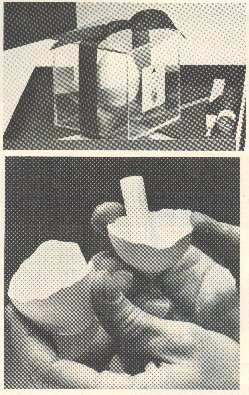
Early in my career, we were developing a series of seminars to promote our software product line. Working with an ad agency, we devised a clever invitation which included a beautiful brochure, and an egg housed in a photo cube (you remember, those little plastic boxes where you could insert photographs). Inside the egg was an invitation to the seminar with the person's name on it. In other words, they were instructed to crack open the egg where they found their invitation and instructions. From a marketing perspective, it was brilliant and garnered a lot of attention. To implement it though was another story.
As this was my pet project, I found myself selecting the seminar sites, compiling lists of potential attendees, and assembling the invitations. That's right, I found myself burdened with blowing out hundreds of eggs, inserting the invitations, and resealing the eggs (using "White Out"). Assembling the boxes and brochures was easy, but preparing the eggs was another story. I simply resigned myself to the task, setup a radio and blew out hundreds of eggs and packed them up. I quickly discovered blowing eggs requires a certain knack. If you do it wrong, the egg blows up on you and creates a mess, but if you take your time and find your rhythm, you'll do just fine. You just cannot push it too hard, and I found the job took me all night to perform. Even though our seminars were a success, I still loathe the thought of blowing out eggs. I'm sure there are other jobs that are worse, but you get the idea.
So, when you find yourself harnessed with a job you hate, either rise to the occasion and overcome adversity, thereby earning the respect of the people around you, or toss in the towel early, assuming you can afford to. Just do not let a teaspoon of dirt turn into a table spoon.
Keep the Faith!
Note: All trademarks both marked and unmarked belong to their respective companies.
 Tim Bryce is a writer and the Managing Director of M&JB Investment Company (M&JB) of Palm Harbor, Florida and has over 30 years of experience in the management consulting field. He can be reached at timb001@phmainstreet.com
For Tim's columns, see:
timbryce.com
Like the article? TELL A FRIEND.
Copyright © 2013 by Tim Bryce. All rights reserved.
NEXT UP: WRISTWATCHES - Are they still status symbols?
LAST TIME: THE ART OF PATIENCE - An art that is difficult to master.
Listen to Tim on WJTN-AM (News Talk 1240) "The Town Square" with host John Siggins (Mon, Wed, Fri, 12:30-3:00pm Eastern), KGAB-AM 650 "The Morning Zone" with host Dave Chaffin (weekdays, 6:00-10:00am Mountain), and KIT-AM 1280 in Yakima, Washington
"The Morning News" with hosts Lance Tormey & Brian Teegarden (weekdays. 6:00-9:00am Pacific). Or tune-in to Tim's channel on YouTube.
Also look for Tim's postings in the Palm Harbor Patch, The Gentlemen's Association, and throughout the Internet.


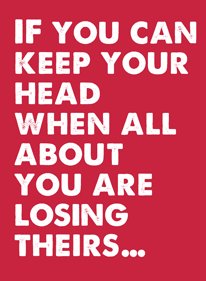 Ever since college, I have been an admirer of Rudyard Kipling's classic poem, "If," whereby he writes:


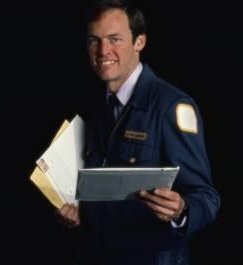 Whenever the United States Postal Service (USPS) suffers a major economic downturn, which seems to be fairly regular, they always threaten to cancel Saturday delivery service. Basically, they contend their operating costs are getting out of hand. Instead of cancelling Saturday service though, there are some alternatives, something they should have been cognizant of all along.
 I remember when I took my first driver's license test in Ohio when I was 16. On the test they had a section where you had to identify traffic signs using multiple choice answers. For the yellow "crossroads" sign they had the following: 1-Church ahead, 2-Crossroads, and, 3-Someone died on this spot. I thought this was particularly funny and wondered how anyone could fail the test. Well, we may not use the crossroads sign but you sure see a lot of roadside traffic death markers out there, usually in the form of a small cross with lots of flowers around it and perhaps other things related to the deceased, such as stuffed toys.
 Recently I stopped to talk with a UPS driver who was making a delivery to our office. I asked him how business was at his company. He claimed it couldn't be better. Internet titan Amazon alone kept them busy, not just delivering books but many other items, including toilet paper. "Toilet paper?" I asked.
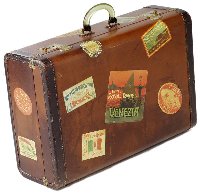 As we all know, travel has become a big headache. What was once considered an enjoyable part of business life is now looked upon with disdain. Today, travel planning is maybe just as difficult as the actual trip itself. In the old days, you would call either an in-house group or an independent travel agency to make arrangements. Actually, it was a rather painless process, but thanks to the Internet, we have all been turned into travel agents, and for some reason I liked it better the other way around.
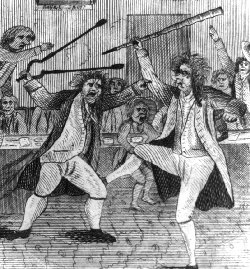 As members of the 21st century, we tend to believe the political discourse of this country has reached new heights. The sad reality though is we pale in comparison to our predecessors. For example, the parallels between the Obama era and that of Jefferson is actually quite remarkable. To illustrate, I recently completed Jon Meachum's book,
 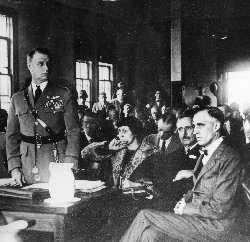 We've been hearing a lot about whistle blowers lately, particularly Edward Snowden, the NSA contractor who ignited the U.S. surveillance program scandal. There are also the whistle blowers involved with the Benghazi scandal and the IRS intimidation program. Whistle blowers have actually been with us a long time. In my life, it goes back to Daniel Ellsberg who in 1969 released the
 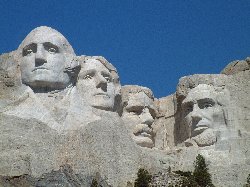 We would all like to believe we select Presidents based on such attributes as experience, vision, and management skills, but unfortunately that has nothing to do with it anymore. Now, it is all about charisma, political correctness, and media spin. This means Madison Avenue has more to do with selling the candidates than we realize. It also means the cream doesn't always rise to the top.
 While visiting with some high school teacher friends, I asked how American History was being taught today. I always had a fondness for history, even if the teacher was boring. I particularly enjoyed learning about the American Civil War, and the events leading up to it. I saw it as an epoch event which defined the American character. The aftermath of the Civil War was also interesting including carpetbagging and the corruption of the Grant administration. Most of what I learned came from History and Social Studies classes I took from elementary school to high school. I didn't take any formal history classes in college, but learned a lot through the other courses I took. To accent the meaning of a subject, the professors often found it necessary to describe its historical roots.
 As you grow older you begin to notice small changes in your life, such as how advertisers no longer market to your age group, or how the entertainment field no longer caters to you. Consequently, you begin to find it difficult to find anything of interest on television or at the movies. Instead, you begin to read more, watch the news and perhaps some reruns before calling it a night. Your sense of fashion and style changes, as does your purchasing decisions. It finally becomes crystal clear that everything is being geared to a younger generation, not yours. In other words, you feel the world passing you by, which I can only presume to be a natural phenomenon.