Search This Blog

Wednesday, December 12, 2012

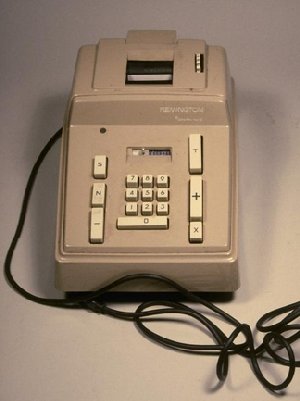
THE REMINGTON RAND ADDING MACHINE, MODEL 41013-10

BRYCE ON OFFICE EQUIPMENT

- They don't make office equipment like this anymore.
(Click for AUDIO VERSION)
To use this segment in a Radio broadcast or Podcast, send TIM a request.


When we started our company back in 1971, we needed some basic office equipment, such as filing cabinets, typewriters, etc. Unlike today, there were no personal computers or smart phones. Access to computers were by dumb terminals and printers were quite large to accommodate massive printouts. For all practical purposes small businesses had little use for computers at the time, primarily due to the excessive costs associated with them. Our most prized equipment were two IBM "Selectric" typewriters and a Remington Rand adding machine, Model 41013-10. The typewriters were replaced many times over the years, and of course, we implemented computer equipment in the office back in 1980. However, it was our adding machine which became the workhorse of our office which we've used for over 40 years now.

The machine is rather large and heavy, much more imposing than the typical calculators you can buy in any office supply store these days. Nevertheless, it can still perform calculations at warp speed with an authoritative printer sound for each calculation. While other equipment came and went, our Remington Rand stayed the course and was used extensively. Frankly, the calculators of today pale in comparison in terms of durability and speed. We have had the unit serviced a few times over the years, but in reality it required little maintenance. As we became more and more dependent on the computer to manage our finances though, use of the adding machine diminished greatly. We still use it for occasional calculations, but not as frequently as the old days.

Recently we began to notice the print was fading on the paper tape. We couldn't remember the last time we changed the ribbon, maybe it was 20 years ago. So, it was finally time to take a look and see what the problem was. We removed the machine's plastic cover thereby revealing its inner workings, a voluminous labyrinth of small metal bars, springs, and gears. It was very intimidating and I would never presume myself to be proficient enough to work on the machine should the necessity arise. Today I am accustomed to simply snapping high-priced printer cartridges into computer printers. If I cannot fix the printer, I would probably be inclined to throw the whole unit away and buy a new one, but you cannot do this with something as imposing as our adding machine.

It had been a long time since we looked at the undercarriage of the Remington Rand which, in a way, reminded me of looking under the hood of a 1957 Chevy. Of course, we had no booklet or any other documentation describing how to maintain it. On the chance of finding an old booklet on the Internet, I began to run some searches based on the model number. Although I couldn't find any documentation, I discovered the adding machine was much older than I had originally imagined, 1955 to be exact. This means the machine was already 16 years old when we bought it second-hand in 1971. It also meant it was 56 years old and a museum piece. I could only find references to it in the Smithsonian Institute's National Museum of American History. Naturally, we found this all rather amusing, that is, until we tried to replace the ribbon.

It had been many years since we had to replace an old-style cotton ribbon such as this, one without a casing, just a ribbon on a small metal spool. Threading the ribbon was actually the hard part as we hadn't performed such a task in a long time and had forgotten the exact route for the ribbon to follow. We persevered though, getting messy ink all over our fingers in the process. Fortunately, and to our pleasant surprise, we discovered we had one last ribbon in our inventory of office supplies. Fearing the ink may have dried up, we were pleased to find the ribbon sealed and packed in a plastic bag and paper box and was as fresh as when we had purchased it some 20 years ago.

It took two of us about 30 minutes to replace the ribbon, and I admit a fair bit of swearing, but we finally figured it out and installed it properly. The machine once again runs like a champ, much to our personal pleasure.

What I found interesting from this experience is that we have all been conditioned to discard office equipment when it wears out, as opposed to maintaining it for a few more years. It also says a lot about how we built things years ago. Here we have a machine that is pushing 60 years of age, yet is rugged, durable, and above all else, works as well as the day it was built. Unfortunately, I cannot make the same claim for computer equipment or smart phones which are three years old or younger. Our Remington Rand 41013-10 adding machine reminds me of the old Timex commercial, whereby, "It takes a lickin' but keeps on tickin'."

One final note, when we finished the job, we thought about reordering a new ribbon for the next time. I'm not sure we could ever find the correct ribbon but beyond that, if the new ribbon we installed lasts as long as the one we just replaced, I do not think it will really matter in the year 2032.

Keep the Faith!

Note: All trademarks both marked and unmarked belong to their respective companies.
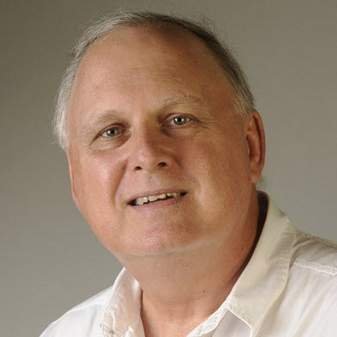
Tim Bryce is a writer and the Managing Director of M&JB Investment Company (M&JB) of Palm Harbor, Florida and has over 30 years of experience in the management consulting field. He can be reached at timb001@phmainstreet.com

For Tim's columns, see:   timbryce.com

Like the article? TELL A FRIEND.


Copyright © 2012 by Tim Bryce. All rights reserved.

NEXT UP:  THE PASSING OF THE CROONERS - How the rich music of Sinatra, Como, Crosby, Martin, et al is slipping away from us.

Listen to Tim on WJTN-AM (News Talk 1240) "The Town Square" with host John Siggins (Mondays, Wednesdays, Fridays, (12:30-3:00pm). 

Also look for Tim's postings in the Palm Harbor Patch, The Gentlemen's Association, and throughout the Internet.

Monday, December 10, 2012

OPERATING ON AUTOPILOT

BRYCE ON MANAGEMENT

- What happens when we fall into a rut.

(Click for AUDIO VERSION)
To use this segment in a Radio broadcast or Podcast, send TIM a request.


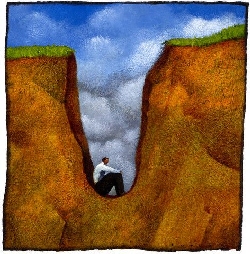
I am always surprised by the vast majority of people who are content operating in an autopilot mode; you know what I mean, people who are more content following the tedium of routine as opposed to thinking for themselves. We see it everyday as we commute to/from work where people stare blankly into space, we see it in the workplace where people want to go on automatic as opposed to thinking for themselves, we see it when people watch television like zombies, and we readily saw it in the last election where people willfully embraced the gospel according to the press as opposed to thinking for themselves. It's amazing we can accomplish anything since people do not wish to exercise their minds and exceed the status quo. Let me give you an example.

I belong to a nonprofit organization which has been suffering from a decline in membership over the last ten years. Year after year, the officers of the association point out the problems with membership, yet offer no leadership in terms of solving the problem. Year after year they whine about it, but never do anything to solve the problem; nothing, nada, zip. Instead of looking for new and imaginative solutions, they concentrate on the status quo and build an unbearable bureaucracy that impedes progress. Bottom-line, they are more interested in squeezing their membership for more money as opposed to growing their base. This is like our tax problem in this country, whereby some people want to raise tax rates, while others want to reduce regulations thereby allowing companies to conduct more business, make more money, and consequently pay more taxes. Bottom-line, the leaders of the nonprofit organization prefer operating on autopilot as opposed to challenging the status quo and introducing new ideas to solve the problem.

I am the type of person who abhors the idea of falling into a rut. As an old systems man, I appreciate the need for performing certain processes in a routine and predictable manner, but I also realize progress is arrested when we surrender to the status quo. This is why I have a natural curiosity to learn and improve how business is performed. Unfortunately, not everyone shares my perspective and prefers to be told what to do. As much as I criticize the concept of micromanagement, I can understand its deployment as many people will go on autopilot unless someone tells them what to do otherwise.

As we should all know, changing the status quo must be handled carefully, as it may ruffle the feathers of those in charge and cause people to break from the comfort of their autopilot mode. As Machiavelli wrote in "The Prince" (1513), "It must be remembered that there is nothing more difficult to plan, more doubtful of success, nor more dangerous to manage than a new system. For the initiator has the enmity of all who would profit by the preservation of the old institution and merely lukewarm defenders in those who gain by the new ones."

Deviating from the status quo means implementing change, and we should change when there is good reason to do so, not simply for the sake of it alone. Whether we like it or not, we live in a world of change. For example, consider how our technology has changed over the last ten years; e.g., smart phones, High Def-TV, tablet computers, etc. Then consider how our music has changed, fashions, speech, politics, even our humor is different than just ten short years ago. Such changes were implemented in small increments over time, seemingly transparent to us, yet they are there. The reality is we live in a world of change yet people steadfastly resist adapting to it, which brings us back to operating in an autopilot mode.

Most of us want little turmoil, we just want to go about our lives and make a living. As I mentioned in my article, "Increasing Brain Power," most people only actively engage their brains for no more than three hours each day, if that. The reason this number is so low is because thinking requires work, something people seem to have an aversion to these days. As such, most people resist "making waves." The reality though is we live in a world of change which we must learn to embrace in order to make progress. By definition, this means to steadily improve our station in life, to exceed the status quo. By operating in an autopilot mode, you are resisting progress and not truly addressing the problems at hand, such as membership at the nonprofit organization I mentioned earlier.

I guess what I'm getting at, remaining in an autopilot mode does yourself a disservice as well as the people around you. It means you are resisting change, and by doing so, you are resisting progress. This is why it is important to change our patterns now and then and get out of the rut we may fall into. Try a different restaurant or type of food, read a book, take a class, wear something different, go on a vacation, or try howling at the moon, whatever. In other words, turn off the autopilot switch now and then and try driving manually. I think you'll enjoy the view.

Keep the Faith!

Note: All trademarks both marked and unmarked belong to their respective companies.

Tim Bryce is a writer and the Managing Director of M&JB Investment Company (M&JB) of Palm Harbor, Florida and has over 30 years of experience in the management consulting field. He can be reached at timb001@phmainstreet.com

For Tim's columns, see:   timbryce.com

Like the article? TELL A FRIEND.


Copyright © 2012 by Tim Bryce. All rights reserved.

NEXT UP:  THE REMINGTON RAND ADDING MACHINE, MODEL 41013-10 - They don't make office equipment like this anymore.

Listen to Tim on WJTN-AM (News Talk 1240) "The Town Square" with host John Siggins (Mondays, Wednesdays, Fridays, (12:30-3:00pm).
Also look for Tim's postings in the Palm Harbor Patch, The Gentlemen's Association, and throughout the Internet.
Friday, December 7, 2012

THE RETURN OF THE SNOWBIRDS

BRYCE ON LIFE

- It's that time of the year again.

(Click for AUDIO VERSION)
To use this segment in a Radio broadcast or Podcast, send TIM a request.


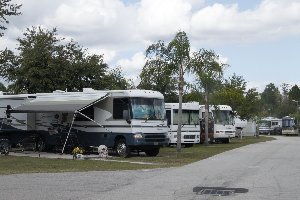
They began to trickle back into the area in early October, but now the migration is in full bloom with the various trailer courts filling up down here in Florida. I am, of course, talking about "Snowbirds," retirees who are escaping the chilly north in favor of a warmer climate for the winter. We rely on the snowbirds heavily as they greatly support our economy through tourism. They may clog the roads and restaurants, speak with some strange dialects, but we welcome them warmly this time of year ("Don-cha-know").
When the Snowbirds arrive, native Floridians typically drive to work a little earlier, and expect to eat at a restaurant a little later than normal, all to give the tourists ample time to enjoy themselves. The only problem we have with them is their varying driving habits. How someone from Michigan drives is considerably different than someone from New York, which is different than someone from Maine, Ohio, and just about anywhere else. It's very exasperating to drive under such conditions which tests our patience.

The trademark of the Snowbird is, of course, the Recreational Vehicle (RV) which comes in a wide variety of sizes, shapes, and costs. Whatever the size, they somehow manage to clog the roads and Walmart parking lots. I'm always amazed by owners of opulent RV's who do not have another form of transportation, such as a bicycle, motor scooter, or automobile. They have to do a lot of walking otherwise. Close to our office is a trailer court where I've seen a Snowbird with a state-of-the-art bus-length RV which includes a tow hitch to pull an equally impressive trailer. Inside the trailer are two beautiful motorcycles and a complete shop to maintain them. Although I consider it a rather smart setup, I would be concerned with driving such "Hogs" down here which can be a rather dangerous proposition.

Over the years I have learned there are RV groups who enjoy traveling in "caravans" throughout North America, and Florida gets more than their fair share this time of year. A caravan is nothing more than a group of friends who travel together as a support group on outings. The first RV in line is considered the "Wagon Master" to lead the group. Somehow the image of Gil Favor leading a cattle drive in "Rawhide" comes to mind. The last RV in line is called the "Tail Gunner" which is reminiscent of a B-17 Flying Fortress. Such caravans represent considerable money to trailer park owners and, as such, they are warmly received.

Although you can easily detect snowbirds by their vernacular, you can just as easily spot them by their attitude which borders on pompous arrogance. Coming from the north, they somehow believe southerners are rubes who know nothing, that only northerners know how things should be done. As a displaced northerner myself who settled here many years ago, I am acutely aware of the cultural divide. I have learned Southerners know plenty, they just express themselves differently than their northern counterparts. They may seem rather cold initially, but if you are kind and open to suggestion, they make you feel right at home. Nowhere is this more apparent than in the food of the south who enjoy such things as grits, different interpretations of barbecue, and such oddities as crawdads and deep fried turkey. Northerners simply do not understand southern cuisine. Then again, it took them about 100 years to learn to appreciate southern fried chicken.

Quite often you will hear snowbirds lament, "That's not how we do it back home." Maybe not, but you are not in the north anymore and you have to learn to acclimate to the local culture. This begins by losing the stuffy northern attitude, relaxing, and learning to enjoy southern hospitality. Welcome Y'all!

Keep the Faith!

Note: All trademarks both marked and unmarked belong to their respective companies.

Tim Bryce is a writer and the Managing Director of M&JB Investment Company (M&JB) of Palm Harbor, Florida and has over 30 years of experience in the management consulting field. He can be reached at timb001@phmainstreet.com

For Tim's columns, see:   timbryce.com

Like the article? TELL A FRIEND.


Copyright © 2012 by Tim Bryce. All rights reserved.

NEXT UP:  OPERATING ON AUTOPILOT - What happens when we fall into a rut.

Listen to Tim on WJTN-AM (News Talk 1240) "The Town Square" with host John Siggins (Mondays, Wednesdays, Fridays, (12:30-3:00pm). 

Also look for Tim's postings in the Palm Harbor Patch, The Gentlemen's Association, and throughout the Internet.

Wednesday, December 5, 2012

POLITICAL POSTMORTEM, 2012

BRYCE ON POLITICS

- What we learned following the election and what we will do about it.

(Click for AUDIO VERSION)
To use this segment in a Radio broadcast or Podcast, send TIM a request.


It's been about a month since the election and the dust has finally settled. I believe we are all glad the negative television commercials are gone, as well as the obnoxious lawn signs, but there are a lot of people who miss the action and are beginning to exhibit withdrawal symptoms. Whereas young people were mostly apathetic during this electoral cycle, older people and party loyalists were transfixed on any news pertaining to the campaigns, including presidential, congressional, and local. This resulted in a windfall for the media. Over $1 billion was spent on television advertising alone for the presidential race, not to mention radio, newspaper, billboards, telephone calls, and Internet advertising. In all, we set another record in terms of campaign spending, but was it really worth it?

According to OpenSecrets.org, a research group tracking money in U.S. politics, the University of California was President Obama's top campaign contributor at $927,568. I don't quite understand how a university system like California's, which is supposed to be floundering financially and raising student tuition to new heights, can afford such generosity. Then again, maybe I just answered my own question. The fifth largest contributor to the president's re-election campaign was the U.S. Government at $528,603. I wonder if the American taxpayers knew about this and agreed to it. I know I was never consulted.

I am still concerned about the apathy of young people and their apparent indifference for our electoral process. I have never seen a generation so uninformed, regardless of the information technology currently available, nor do they seem concerned about the future of the country. This frightens me.

We also learned the country is as polarized as ever, maybe more so. This has been building since the 2000 election with the hanging chads, but has gotten progressively worse. For the first time though, anger has been expressed through social media, such as the physical threats made to assassinate Gov. Romney or calls for uprisings. Such open expressions of hostility are not new, but their propagation through technology is. I pity the Secret Service which has to investigate such threats and taunts.

The media encourages such behavior, as exemplified by MSNBC's Lawrence O'Donnell who challenged Tagg Romney to a fight on camera (see VIDEO). O'Donnell was neither reprimanded or fired by the network. This can only be construed as MSNBC approving of his antics, and by inference, promotes and endorses open hostilities.

Then there is the matter of lying, cheating, and deceit in the campaign itself, either by official representatives of the campaigns or the public, which is why Voter Identification became such a major issue this past year. The closer we got to the election, the more dirty political tricks we saw, such as the letters sent to Republicans in the closing days of the campaign that informed them it wasn't necessary for them to vote.

The biggest lesson I learned from this electoral cycle though was that the country hates our current form of elections. It is sinfully wasteful in terms of finances, consumes too much time thereby promoting polarity, and distracts politicians from tending to the duties taxpayers pay them to do. We probably spent more on the election than what President Obama proposed to tax the rich. Our form of elections are neither efficient or effective. For a country who prides itself on the efficiency of our technology, we certainly do a lousy job of conducting an election. It's barbaric, but we only have ourselves to blame. As Pogo said, "We have met the enemy, and he is us."

One last note, in a recent poll of registered voters, a paltry 22% believed in the polls during the campaign, a whopping 75% didn't find the media credible in their political reporting, and the rest were unsure what day it was.

Keep the Faith!

Note: All trademarks both marked and unmarked belong to their respective companies.

Tim Bryce is a writer and the Managing Director of M&JB Investment Company (M&JB) of Palm Harbor, Florida and has over 30 years of experience in the management consulting field. He can be reached at timb001@phmainstreet.com

For Tim's columns, see:   timbryce.com

Like the article? TELL A FRIEND.


Copyright © 2012 by Tim Bryce. All rights reserved.

NEXT UP:  THE RETURN OF THE SNOWBIRDS - It's that time of the year again.

Listen to Tim on WJTN-AM (News Talk 1240) "The Town Square" with host John Siggins (Mondays, Wednesdays, Fridays, (12:30-3:00pm).
Also look for Tim's postings in the Palm Harbor Patch, The Gentlemen's Association, and throughout the Internet.

Monday, December 3, 2012

WELCOME TO DECEMBER

BRYCE ON LIFE

- Tis the season for "Bah" and Humbug"!

(Click for AUDIO VERSION)
To use this segment in a Radio broadcast or Podcast, send TIM a request.


There's only one other month I dislike more than July, and that is the month of December. During July, people in my neck of the woods evacuate in record numbers, leaving a ghost town behind. December though seems just plain "lost" to me, meaning not much is accomplished as the schools shut down and people scurry out of town on vacation or to celebrate the holidays elsewhere.
Following Thanksgiving, the corporate world also seems to shut down until the new year. People try to use up their vacation days, a plethora of company parties are planned, small companies shut down, and voice mail seems to run everything. From a business perspective, Internet traffic drops off noticeably (except for spam), telephone calls diminish, and for all intents and purposes snail mail disappears completely. It's like the country goes into a state of hibernation. The only exception to this is sales as companies are desperately trying to spend money before the end of the year as opposed to turning it over to the government in the form of taxes. Aside from this, the December slow down is a good month to close up the operating year and make plans for the next one.

As a kid, I enjoyed December as it represented the Christmas holidays and toys. I've long outgrown that though, and am very much turned off by the commercialization of the holidays. The idea of decorating the house inside and out, sending out holiday cards which nobody reads, scurrying around to buy presents which will ultimately be returned is loathsome to me. Then there is the matter of pitiful television programming whereby we watch shows like "Frosty the Snowman" for the millionth time or sitcoms wishing everyone politically correct tidings of the season, even though they were recorded last April. Maybe I should just declare December "cruise month" and be done with the holidays once and for all.

Company parties this time of year are always entertaining, particularly when you see a drunken employee telling off the boss. Excuse me, I meant a soon-to-be-fired drunken employee. In the business world, an employee's upwards mobility in the corporate hierarchy can be greatly enhanced by producing a good holiday party. You may remember me describing the efforts of a friend who was put in charge of an IBM Christmas party years ago in Poughkeepsie. Employee families were invited to attend, including the children of course. It was a very big affair. Every child in attendance was given a good present by Santa (not something cheap), everyone fed on a sumptuous meal, there was plenty of libations, music and entertainment, and all within budget. My friend, even had enough money left over to make a respectable donation to a charity on behalf of the company. And, Yes, a photographer was on hand to take everyone's picture. The company party ultimately catapulted my friend's career at IBM where he served for many years.

December is also when we generally "pork up" on all the goodies baked and cooked this time of year. If we go to holiday parties, we tend to overeat, over indulge, and pledge to turn over a new leaf in the new year, which we seldom do. It's particularly difficult for people living in the snowy north who are stuck inside and come down with a touch of Cabin Fever. At least down here in Florida, we can sneak outside and do some lawn work or visit the beach.

I generally keep a low profile during the month of December in order to avoid the madness and not add to it. Others may enjoy the fanfare of the holidays, I try to stay out of the limelight and quietly go about my business. It's not that I am avoiding my faith, certainly I am not. I just find it is something rather personal.

I'm not sure why we make a big deal out of December. Maybe it's because of our religious faith, or maybe it represents the end of a calendar year which was either good or bad (if the latter, please do not call me). People seem to have forgotten that December was invented in 1929 as a means to comfort those hurt during the stock market crash in October. Prior to this, there was only eleven months. Following Thanksgiving, we went straight into the new year. Retailers learned to capitalize this time of the year by unloading the shoddy merchandise they bought too much of during the year. Whatever the reason, good luck this month and what's a good number for a cruise line?

Keep the Faith!

Note: All trademarks both marked and unmarked belong to their respective companies.

Tim Bryce is a writer and the Managing Director of M&JB Investment Company (M&JB) of Palm Harbor, Florida and has over 30 years of experience in the management consulting field. He can be reached at timb001@phmainstreet.com

For Tim's columns, see:   timbryce.com

Like the article? TELL A FRIEND.


Copyright © 2012 by Tim Bryce. All rights reserved.

Friday, November 30, 2012

THE INNER BEAUTY OF WOMEN

BRYCE ON LIFE

- Which can be more alluring than just physical beauty.

(Click for AUDIO VERSION)
To use this segment in a Radio broadcast or Podcast, send TIM a request.


I want to speak for a moment on the beauty of women. No, I'm not a cosmetologist, dermatologist, hair dresser, or fashion coordinator, just an ordinary heterosexual with a fondness for the opposite sex. I always knew there were differences between boys and girls, but this didn't become obvious to me until I entered junior high school whereupon I noticed the girls were beginning to apply cosmetics, change their hair, and wear more fashionable clothes. I guess this marked the beginning of our mating rituals as the boys began to sit up and take notice.
It has been my observation over the years that women depend mostly on physical attractiveness to lure a mate. This is why millions, if not billions of dollars, are spent on beauty products for hair, skin, nails, eyes, lips, legs, even the scent of a women. Let us also not forget the enormity of the fashion industry which includes not just clothes, but shoes and hats as well. It is obviously a gigantic business. Some women are naturally beautiful, and know it. Others have to work at it.

I wonder though if women are too dependent on physical appearance and overlook the allure of a personality. Over the years I have met many women who may have lacked looks, but are incredibly sensual just from their personality alone. They may have a good sense of humor, an ease about them, a confidence, or something simply feminine. I guess they just feel comfortable in their own skin and know how to make others feel likewise. Perhaps this is the "feminine mystique" I've been hearing about all these years. I have seen women who know how to light up a room with nothing more than a smile and a gentle wave of their hand, yet are considered frumpy otherwise. Men gravitate to such women naturally as they are more approachable as opposed to a beauty with an incredible figure, simply because they know how to carry a conversation and make the people around them feel at ease.

Some people think such things as sex and cooking are part of the allure of women, and I suspect there are many men who think this way. As for me, such things are nothing more than the icing on the cake. Any relationship based on this alone is doomed from the outset.

Instead of spending tons of money on the physical aspects, I wish they would spend a little on cultivating a personality, something that can put men at ease, even be disarmingly flirtatious. Most men can be intimidated by a ravishing beauty, thereby considering them untouchable. After they have summoned up the courage to talk to such a woman, they are crestfallen when they find there is nothing behind the facade. Instead, they would rather be able to enjoy the woman's company, but if the lights are on and nobody is home, the encounter will be brief. I'm certainly not suggesting the woman be submissive to the male. In fact, I find that rather unappealing. The women who possesses a wit, a warm heart, an openness about them, a sense of humor, and confidence about themselves in spite of some physical defect can be much more interesting and stimulating than a glamour queen.

I guess what I'm describing is the "inner beauty" of a woman, which can be incredibly alluring, and I presume it is essentially no different for how women consider men. However, for those people who lack both an outer and inner beauty, I pray they're good in the kitchen or bedroom. Either that, or they begin to frequent a salon, gym or a voice coach. Otherwise they are going to remain rather lonely for a long time.

Keep the Faith!

Note: All trademarks both marked and unmarked belong to their respective companies.

Tim Bryce is a writer and the Managing Director of M&JB Investment Company (M&JB) of Palm Harbor, Florida and has over 30 years of experience in the management consulting field. He can be reached at timb001@phmainstreet.com

For Tim's columns, see:   timbryce.com

Like the article? TELL A FRIEND.


Copyright © 2012 by Tim Bryce. All rights reserved.

Wednesday, November 28, 2012

THE DISPARITY BETWEEN CAPITALISM AND SOCIALISM

BRYCE ON POLITICS

- Do young people know the difference between the two?

(Click for AUDIO VERSION)
To use this segment in a Radio broadcast or Podcast, send TIM a request.


I was recently invited to give a talk at a business conference designed to help high school seniors in our county who have an interest in pursuing a business career. Specifically, I was assigned two sessions to describe what the young person should expect as they make the transition into adult life which was based in large part on my book, "MORPHING INTO THE REAL WORLD - A Handbook for Entering the Work Force."

I wore a suit and tie for the occasion to express my credibility and out of respect for my audience, even though none were older than eighteen years of age. This was going to be an unusual talk for me as I normally address adults, not youth. Because of this, I wanted to know a little about my audience. So, using a show of hands, I inquired where the students were from, such as their high schools, but I also flippantly asked how many were capitalists and, conversely, if there were any socialists present. I received a lot of blank stares on both accounts. This caused me to deviate from my planned program and deliver a mini-dissertation describing the differences. I contended in order to be successful in business, the students would be wise to know what each meant.

Interestingly, some were brainwashed into believing capitalism was evil and simply represented another form of greed. I contend greed is a human emotion, and can be equally applied under either system. Therefore, capitalism is not greed, it is a celebration of the individual's right to try and succeed. Whereas capitalism focuses on the rights of the individual, socialism concentrates on the rights of the group overall.

I explained, under capitalism the individual has the right to try his/her hand at anything they are so inclined, thereby representing freedom. They simply have the right to try, nothing more, nothing less. If they are lucky, they may succeed, but they also run the risk of failure. Failure is an inherent and important part of the system. There are no guarantees for success. This is why risk is important, to force the individual to work harder and smarter to avoid defeat. As such, capitalism encourages entrepreneurship (innovation and invention). If the person is successful, they are entitled to enjoy the fruits of their labor. If they are not, they must suffer defeat. This should force the person to redouble his/her efforts and try again which, of course, is evolution in action.

To encourage entrepreneurship, our founding fathers took steps to safeguard the intellectual property of the individual. This specifically includes Article 1, Section 8 of the United States Constitution, wherein the powers of Congress are defined. It states, in part, "The Congress shall have Power ... To promote the Progress of Science and useful Arts, by securing for limited Times to Authors and Inventors the exclusive Right to their respective Writings and Discoveries;". This led to such institutions as the Patent and Copyright offices which were specifically designed to safeguard an individual's intellectual property. As early as 1790, the first patent and copyright were approved. At the time, safeguarding intellectual property in this manner was rare to the rest of the world. By promoting the entrepreneurial rights of the individual, our forefathers were embracing capitalism.

As mentioned, the focus in Socialism in on the group, not the individual. Here, the rights of the many take precedence over the individual. Because of this, personal initiative is discouraged and the individual cannot endeavor to do better than the next person, and failure is prohibited; the group will always bail you out. There is no notion of assuming risk and being held personally accountable for your actions. All compensation is equitable among workers with no rewards for outstanding achievement or penalties for inferior workmanship. Intellectual property belongs to the group, not the individual. Consequently, this approach discourages entrepreneurship and tends to promote apathy.

The Achilles' heel of Socialism is the belief that everyone is equal and, as such, should be treated and compensated on an equitable basis. On the surface, this sounds like a fair and noble notion. The assumption though is that everyone works at the same level of effort and expertise which, of course, is simply not so. Restraining the individual from achieving higher levels of workmanship or striving for higher goals is unnatural and discourages the worker.

To summarize:

CAPITALISMSOCIALISM
FOCUS The rights of the individual; the right to "try"; requires freedom. The rights of the group; collective decision making; regulations restrain the individual.
ENTREPRENEURSHIP Yes, encourages risk; enjoys fruits of labor; individual assumes personal responsibility; promotes evolution. No, discourages risk; individual cannot fail; encourages apathy, discourages change; unnatural.
INTELLECTUAL PROPERTY Yes, belongs to the individual. No, property belongs to the group.

Before closing, I encouraged the students to become familiar with the works of author Ayn Rand, particularly "The Fountainhead" (1943) and "Atlas Shrugged" (1957). Rand's work touted the need for individual achievement and capitalism, and saw them as two intertwined concepts.

In business, we have to be mindful of encouraging individual achievement and teamwork equally. We realize our team is as good as its weakest player, hence the need to encourage workers to strive harder for perfection. However, there will always be those people who will rise above others and it certainly wouldn't make sense to impede their growth.

"But you say that money is made by the strong at the expense of the weak? What strength do you mean? It is not the strength of guns or muscles. Wealth is the product of man's capacity to think. Then is money made by the man who invents a motor at the expense of those who did not invent it? Is money made by the intelligent at the expense of the fools? By the able at the expense of the incompetent? By the ambitious at the expense of the lazy? Money is made--before it can be looted or mooched--made by the effort of every honest man, each to the extent of his ability. An honest man is one who knows that he can't consume more than he has produced." - Ayn Rand

Keep the Faith!

Note: All trademarks both marked and unmarked belong to their respective companies.

Tim Bryce is a writer and the Managing Director of M&JB Investment Company (M&JB) of Palm Harbor, Florida and has over 30 years of experience in the management consulting field. He can be reached at timb001@phmainstreet.com

For Tim's columns, see:   timbryce.com

Like the article? TELL A FRIEND.


Copyright © 2012 by Tim Bryce. All rights reserved.