- Probably because we haven't been paying attention to the changes around us.
Click for AUDIO VERSION.
To use this segment in a Radio broadcast or Podcast, send TIM a request.
 I was recently talking to a friend who was commenting on some of my pet peeves, many of which he could relate to. Inevitably, he asked me why the world was so screwed up today. I thought about this for quite some time afterwards and believe I finally have an answer; it has always been screwed up, we simply weren't paying attention. Let me explain...
As we enter the work force, usually in our 20's, we're full of vim and vigor. We tend to tackle assignments brashly, some would say recklessly or impetuously. Because we want to make a name for ourselves, we tend to knock down obstacles in order to reach our goals and be rewarded. What we lack in knowledge and experience, we make up for in sheer energy.
In our 30's we're still energetic but we become smarter as we gain experience in what we do. As we enter our 40's, we tend to slow down a bit but think of ourselves at the top of our game.
In our 50's, we've become fully experienced in our profession and life, and from this we become acutely aware of our limitations. It is then when we begin to realize time has passed too quickly and we finally start to recognize the changes in the world. In other words, in our youth we were preoccupied with starting our lives; so much so, we were distracted and did not realize the world was changing around us. As we get older, we slow down and suddenly become cognizant of the changes and ask why things aren't the same as they used to be in our youth.
Our world is a big and complicated place. So big, it is impossible to stay on top of all of the changes going on around us, even in spite of the 24/7 news media. Changes come at us from many directions: politics, science and technology, the arts, competition, fashion, customs, public opinion, social issues, international affairs, and a wide range of changing laws, rules and regulations. However, change is so slow, it is almost transparent to us and if we become distracted, as most of us do, we don't recognize it. Only after a few decades do the changes become vividly clear to us and by then, it is usually too late to do anything about them as we should have been paying attention earlier on. Suddenly we realize people are acting and looking different, particularly the next generation, that social and moral norms are different, and the world has changed.
So why do we get "peeved"? I think it is simply because we have suddenly realized the world is different and the status quo is unlike what we remembered from our youth. And we don't like it.
First published: October 23, 2009
Keep the Faith!
Note: All trademarks both marked and unmarked belong to their respective companies.
 Tim Bryce is a writer and the Managing Director of M&JB Investment Company (M&JB) of Palm Harbor, Florida and has over 40 years of experience in the management consulting field. He can be reached at timb001@phmainstreet.com
For Tim's columns, see: timbryce.com
Like the article? TELL A FRIEND.
Copyright © 2017 by Tim Bryce. All rights reserved.
Also read Tim's columns in the THE HUFFINGTON POST
NEXT UP: INTUITIVENESS, THE SIXTH SENSE - Some recognition for the Radar O'Reillys of the world.
LAST TIME: WHY WE LISTEN TO RUSH & COMPANY - Maybe because they are "right"?
Listen to Tim on WZIG-FM (104.1) in Palm Harbor,FL; KIT-AM (1280) in Yakima, Washington "The Morning News" with hosts Dave Ettl & Lance Tormey (weekdays. 6:00-9:00am Pacific). Or tune-in to Tim's channel on YouTube. Click for TIM'S LIBRARY OF AUDIO CLIPS.


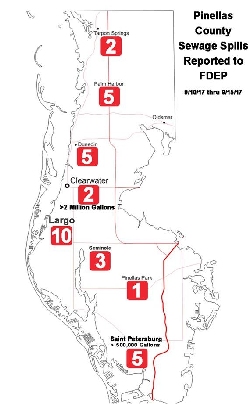 The November 7th referendum to renew the "Pennies for Pinellas" tax is not a slam dunk. The Pinellas County Commissioners would have us believe it is a done deal. Not so fast. There is a lack of accountability in the wording which will not address the problems of Pinellas County effectively. To illustrate:
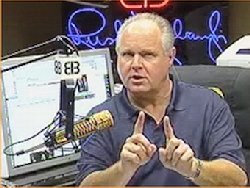 When you hear the name "Rush Limbaugh" mentioned by liberals and the press, the adjectives "controversial", "polarizing", "bombastic", "inflammatory", and "shock-jock" are often mentioned. Actually, such descriptions are also used to characterize Glenn Beck, Sean Hannity, Bill O'Reilly, and anyone who opposes liberal policies and positions. Although these on-air personalities are generally regarded as the "Dark Side" of politics by Democrats, they also enjoy great ratings on the air waves.
 It seems I do not receive too many telephone calls from humans anymore. Rather, most are from computers (aka, "Robo Calls") either soliciting something or informing me of the schedule of a maintenance worker. Like a lot of you, I am not immune to the absurd spam calls. One of my favorites is, "Stop what you're doing and listen carefully..." Yea, like I'm going to drop everything and listen to some dolt trying to sell me something. I can usually hang-up on such calls within one second.
 Have you ever gone into a fast food franchise and felt you were being processed essentially no different than their product? I think we all have, and frankly I don't like it. Let me give you a couple of examples.
 During this time of the year, when tourists are flocking to Florida, traffic can be quite congested on our highways, not to mention fast. Although the posted speed limit is 45mph for the highway in front of our office, motorists frequently exceed the limit (loudly I might add). Like any local government these days, our county has to tighten its belts, particularly the sheriff's office which has been experiencing budget cuts. Not surprising, they tend to overlook speeding in certain areas, such as in front of my office. So I took it upon myself to devise a cost effective way to slow traffic.
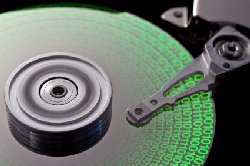 For something that is supposed to be "soft", computer software exhibits some pretty "hard" characteristics. The original premise behind the COBOL programming language was to devise a language that could be easily ported to several computers. This never truly happened due to computer manufacturers who tweaked the language to suit their particular needs. What ran on an IBM machine, for example, didn't necessarily run the same on Honeywell, UNIVAC, or the rest of the BUNCH. Consequently, software developers had to maintain different versions of source code to suit the particular needs of the various computer compilers. This plagued all third generation languages until Sun introduced JAVA in the 1990's. The JAVA premise that a programmer should "write once, run everywhere" was the right idea and the language began to gain momentum, until it ran into Microsoft who didn't want to turn the operating system into an inconsequential afterthought. JAVA lives on, but not to the extent it should have, and developers are back to managing separate versions of source code.
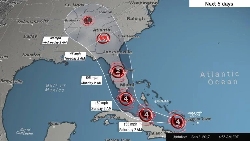 Well, we survived Irma... not just the hurricane, but a ratings hungry news media, power and gas outages, and lack of reliable news. Frankly, I'm surprised we still have a sense of humor. Contrary to what the media told us, Irma was not the most devastating hurricane to hit Florida "ever, ever." Have we already forgotten Andrew of 1992 which wiped out Homestead and left thousands homeless? What about the legendary "No Name Storm" of 1993 which produced more debris, downed trees, boat damage, and power outages than Irma? Or 2004 where hurricanes Charley, Frances, and Ivan crisscrossed the state leaving a swath of destruction behind? Of the storms I have witnessed in Florida since 1985, I would place Irma a distant fourth.
 Are there any Industrial-Organizational Psychologists out there anymore? After looking over the U.S. Bureau of Labor Statistics, the numbers don't look very promising. Pity; It's a useful profession aimed at studying human behavior in relation to the work environment and making recommendations for improving productivity. I'm afraid the position has diminished and defaulted to individual managers who are not properly trained to be office shrinks.
 I find as I grow older I tend to gravitate towards simpler things. Take coffee for instance, I've always found pleasure in a simple cup of black coffee. I honestly believe I can distinguish a good cup of coffee from a bad one simply by drinking it black. Adding sugar, cream, and any other additive only masks the flavor. Then again, the bitter taste of the coffee bean is what a lot of people try to avoid, preferring instead a variety of sweeteners transforming it into more of a ice cream sundae as opposed to a hot cup of coffee in the traditional sense. Now coffee comes in a myriad of flavors including vanilla, caramel, cinnamon, and peppermint. Its whipped with cream, sprinkled with chocolate, and chilled with ice. Perhaps the best way to describe coffee's transformation is from the "the rocket fuel of business" to Bosco.
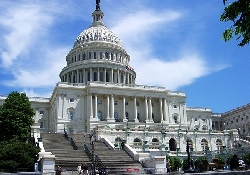 Over the last 100 years the federal government has grown by leaps and bounds. The impetus for this is probably economic related (e.g., "The Great Depression," and today's world economy), and military related (including two world wars, Korea, Viet Nam, Iraq, numerous minor engagements, and the War on Terror). We also have several years of presidential campaigns heaped in where we were promised a lot more than two chickens in every pot or two cars in every garage. This has all changed the face of our government where we now have several more agencies and departments to deliver on presidential promises. For example, during my lifetime alone we have seen the introduction of several cabinet posts, such as HUD, Transportation, Energy, Education, Veterans Affairs, EPA, and Homeland Security.
 I recently went out to dinner with a business friend who owns a medium sized manufacturing company with just over 50 employees. Over a couple of cocktails he started to express to me his frustration with his people. He claimed to pay them well, provides a comfortable work environment, and offers a respectable benefits package. Regardless, he wished his people were more dedicated and professional in their attitude. He yearned for the old days when there was more pride in workmanship (and you thought I was the last of the whiners). I've known my friend for a long time and know his management style; he works well with people and although he insists on organization and structure, he tends to empower his workers to assume responsibility as opposed to micromanaging them to death. Frankly, I know a lot of people who would love to work in his environment, yet he still had this problem of employee attitudes and asked me for my thoughts on it.