- More than anything, equality is about ego.
Click for AUDIO VERSION.
To use this segment in a Radio broadcast or Podcast, send TIM a request.
 The Declaration of Independence tells us that all men are created equal, but we sure don't want to be treated as such when we get older. Americans steadfastly and openly proclaim their belief in the concept of equality, yet adamantly refuse to be treated in this manner. Equality, therefore, is an American myth and one reason why we tend to act more like stubborn individualists as opposed to team players. Being treated equally and fairly sounds nice, but it's a matter of who knows who, and what we can do for each other (aka, "Politics 101").
Waiting in line is a good example of everyone being treated equally; basically, everyone waits their turn in line, but inevitably there are people who want to cut in line, or go directly to the front of it and are willing to pay handsomely to do so. Celebrities and the rich pay for special privileges, e.g.; to get the best table in a restaurant, the best medical treatment, legal breaks, free drinks, and the best seat in the house.
Equality in business is definitely a myth. First, you have to understand companies act more like dictatorships as opposed to democratic institutions. We use job titles to differentiate people and reflect the chain of command. Organization charts, which depicts a hierarchy, represents documented proof that people are not equal, even if it is nothing more than a management versus labor relationship.
Even in nonprofit organizations and fraternal groups that openly promote the concept of equality, you will not find it. Instead, you have people craving recognition through titles, sashes, badges, pins, and other such nonsense, thereby trying to delineate themselves from everyone else. Basically, it's a game of one-upmanship. As an aside, I find it amusing when a a person who didn't accomplish anything in their professional career, tries to find glory and power through nonprofit organizations. I refer to this as "much ado about nothing."
There are three areas where people try to differentiate themselves:
* Their physical attributes, such as strength, size, abilities, and appearance.
* Their intellect whereby we try to discern who is smarter than who.
* Their social attributes, which is probably the most powerful of the three, as defined by wealth, personal connections, social standing, and conduct.
More than anything, equality is about ego and we are taught at an early age not to be just be as good as someone else, but to be better than them; and if you cannot be better than them, then undermine them every chance you get. Compare this to the Japanese who are taught at any early age to work together collectively towards common goals. Even as you enter the workforce you are placed on an even footing with others in your "class." It is only after a number of years working at the company (ten normally) when it is decided what your position and job title will be. The Japanese may not tout equality in their culture as much as the Americans do, but it is much more ingrained in them than the Americans.
In the United States, we have a lot of rights, we have a lot of rules, but we really don't have as much equality as people believe we do, which is why I call it a myth. You might have an understanding about racial, gender, and social rights, but you will never have equality in the minds of the American masses. So, please put down the placards saying you want equality. Don't make me laugh. You don't want equality, you want to leapfrog ahead.
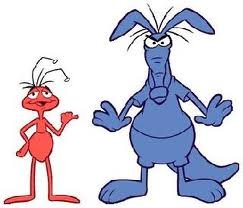
I am reminded of the story of the ant and the aardvark who happened upon one and other on the street. The ant being somewhat nervous about the aardvark's intentions said to him, "Brother Aardvark, it is good to see you. We are both creatures of the earth, we both drink the same water and breath the same air. We're equals." The aardvark shot out his long sticky tongue and devoured the ant in the blink of an eye, burped, and replied, "I'm afraid you've been misinformed my boy."
Keep the Faith!
Note: All trademarks both marked and unmarked belong to their respective companies.
 Tim Bryce is a writer and the Managing Director of M&JB Investment Company (M&JB) of Palm Harbor, Florida and has over 40 years of experience in the management consulting field. He can be reached at timb001@phmainstreet.com
For Tim's columns, see: timbryce.com
Like the article? TELL A FRIEND.
Copyright © 2017 by Tim Bryce. All rights reserved.
Also read Tim's columns in the THE HUFFINGTON POST
NEXT UP: BECOMING AN EDUCATED VOTER - How to become conversant in politics and government.
LAST TIME: FAILING TO ACT - It goes well beyond insanity.
Listen to Tim on WZIG-FM (104.1) in Palm Harbor,FL; KIT-AM (1280) in Yakima, Washington "The Morning News" with hosts Dave Ettl & Lance Tormey (weekdays. 6:00-9:00am Pacific). Or tune-in to Tim's channel on YouTube. Click for TIM'S LIBRARY OF AUDIO CLIPS.


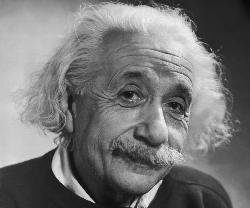 One of my favorite quotes from Albert Einstein is his definition of insanity: "doing the same thing over and over again and expecting different results." I'm afraid we see this too often, be it in companies, government or the general public. In other words, there is a tendency for people to maintain the status quo even if it doesn't produce beneficial results, or even if it is counter productive.
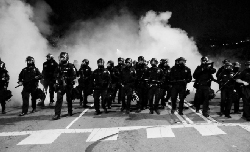 These are troubling times. We have Islamic terrorists who would like nothing better than to snuff out the rest of the world. We have a tin-horn dictator in North Korea with access to nuclear devices. And we have other crackpot third world regimes thirsty for power and enslave their people. At home, we have two diametrically opposed ideologies at each other's throats, with no room for compromise. It occurred to me recently we have been hearing these same stories day after day for quite some time now.
 While I was driving home one night, I was stopped at a traffic light and began to imagine what life would be like without the many electronic conveniences we enjoy. Hmm...
 Back in the 1980's a generation of young MBA's were unleashed on the corporate world and turned it on its ear. These "whiz kids" slashed costs wherever possible, particularly in training programs, mentoring, and reduced administrative personnel. Although their tactics did indeed save money in the short run, they created long-term headaches down the road, such as creating morale problems which lead to a disconnect between workers and their employers, which ultimately lead to outsourcing many jobs overseas. Quality in manufactured goods and services also suffered as a result of less training. Whereas employees had previously been empowered to overcome problems under a spirit of teamwork, managers began to closely supervise workers which today is commonly referred to as "micromanagement." The point is, the whiz kids of the day made a name for themselves simply by implementing short term changes which were highly visible on the next quarterly P&L statement. Although they could show short-term benefits rather quickly, their bean counter approach had devastating long-term effects on many businesses which haunted companies for years.
 According to recent polls, the news media has been taking a pounding in terms of losing credibility with the American public. People no longer trust the press as they see it as nothing more than a cog in an ideology machine as opposed to a trustworthy source of unbiased information. From this, the concept of "fake News" has emerged, causing people to look for news from other outlets, such as social media, which is also not necessarily the most reliable.
 Whenever I have somewhere to go with friends or family, I normally volunteer to drive. When people ask me why I do so, I explain it is not simply because I enjoy the act of driving, as much as I somehow appreciate the equality involved. Let me explain. It occurred to me a long time ago that driving is one of the few venues in the world that doesn't recognize a socioeconomic class structure, race or religion. Regardless if you are a multimillionaire driving a Rolls Royce or Lamborghini, a bum driving a jalopy, or anything in-between, driving requires everyone to behave equally. Rich man, poor man, beggar man, thief, everyone is on the level and must behave as such in order for this important transportation system to work. And for some reason, knowing I can start each day on the level with everyone else is encouraging to me.
 Ever wonder why people treat you the way they do? A lot has to do with how you are perceived by others. Let me give you an example, years ago when I lived in Cincinnati, Ohio I would often drive up to Canada to visit customers along The King's Highway 401 in lower Ontario. My point of entry and exit was Detroit and I would either take the Ambassador Bridge or Detroit-Windsor Tunnel to and from Canada. Regardless of the route I took, I noticed I would always be asked by the customs agents to pull my car over to the side where I would have to endure the hassle of a search. This went on for years until I realized it was probably my demeanor and expression on my face that caused me to be pulled over, which was tired and cranky looking. As an experiment, I approached the customs agents with a smile on my face, my window down, and was very chatty and approachable with them. Surprisingly, I was let through without any trouble, and I've never been pulled over again.
 On more than one occasion you have heard me express my skepticism on the beneficial effects of technology on our culture. Proponents obviously claim it has a positive effect, and proudly point at the capacity, speed, and sizzle embedded in such things as computers, cell phones, and other electronic devices, but I'm still not convinced. For example:
 Have you ever heard the expression, "The guy who has the most toys, wins"? This was obviously invented by someone keenly aware of status symbols. It may sound clever, but I have to wonder what they "win"; the adoration of the vendors they bought everything from? It sounds rather shallow doesn't it?
 "Thank God for Donald Trump." There, I've said it. Now let me tell you why. Most newly elected presidents enjoy a short period of harmony before the press openly attacks them. Not Donald Trump. He has been under attack since well before he shocked the media by his victory in November. Between the press, the Democrats in Congress, the DC and entertainment establishments, and the anarchists in the street, an unwholesome rebellion has erupted to thwart Mr. Trump at every turn. It is is so vicious, it makes the Nixon episode seem like "Bambi."
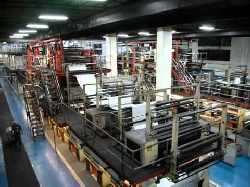 In the past, the expression "Stop the Press" meant to halt production in order to include a pressing news story in a newspaper, now it is becoming a war cry to take the news media to task for "fake news."