- What I learned during the years I spent on the Board of Directors for nonprofit organizations.
 I made an important decision the other day, namely 2016 will be my last year serving on a board of directors for a nonprofit organization. It's time for someone else to step up to the plate. For forty years I volunteered my time for dozens of organizations. So much so, I stopped counting when I reached fifty Boards. I've served on everything from professional societies for management, computers and systems, to homeowner groups, sports clubs, fraternal organizations, and more.
I coached and umpired baseball for ten years, also serving on the board for the local Little League. One day, we held a practice for my boys team and I was shagging balls in the outfield. It was a beautiful day and it had been a good practice. However, as I picked up the last few baseballs, I looked up and realized I was no longer enjoying myself and it had become more laborious than fun. It was at that moment when I realized my days with Little League baseball were over and I retired from it shortly thereafter. That is how I feel today where I am involved with two nonprofits. Following a board meeting, I suddenly realized it was time to go and I made a promise to myself not to extend any more commitments past 2016 when my tours of duty end.
I didn't serve on these boards for any accolades or titles, just to help make the organizations better. As someone who has seen quite a bit of the world, I didn't need such pomp and circumstance. As a management consultant I was fortunate to possess the skills needed to assist such groups, for example: I developed and balanced budgets, cleaned up finances, created data bases to manage memberships, developed web pages and promoted them accordingly, created and updated bylaws, took minutes, developed speaker programs, conducted special projects, developed and distributed newsletters and communications to memberships and met some interesting people along the way. Yes, it took some time to perform, but I had a lot of fun in the process. I like to believe I left each place better than I found it, which should be the objective of anyone serving on a board.
The question is, "Was it worth it?" For the professional societies, I met several people, earned their respect, and learned a lot in the process. For homeowner associations, I believe I played an important role in maintaining the value of homes in the community, if not increasing them. For sports clubs, it was a joy watching my kids, both boys and girls, grow and mature into adulthood. I was also appointed or elected as Chairman or Director at District, County, and State levels for a variety of tasks. All of which were rewarding experiences.
I have learned a lot about nonprofits over the years. However, there are primarily three lessons I wish to convey to my readers:
1. Most nonprofit organizations are run by nice people who haven't got a clue as to what they are doing. They may have the best intentions, but do not understand a nonprofit is a legal entity in the eyes of the state and, as such, needs to be run like a business. No, it doesn't take "A Village." It takes business skills. You realize this when the group can no longer pay its bills or are sued. However, if you are lucky to get the right group together as a board, you'll enjoy effective leadership, smooth administration, stable finances, good communications, and prosperity.
2. The work of a nonprofit is really not that difficult. It may require some time and effort but I have yet to see a truly difficult task in a nonprofit, and you have to remember I have served in just about every capacity. Something that helps immeasurably in this regard, is the development of "standard practices," for such things as managing finances, membership, and communications to service constituents.
3. Anyone looking for accolades is joining for the wrong reason. They will likely perform little and assume credit for anything done. Such people are worthless for accomplishing anything of substance, and can hurt the spirit of the organization. Some people are afraid to reprimand such parasites fearing it will create a morale problem. The reality is the morale problem was created the moment the person assumed their position. "But they are volunteers, Tim; you cannot fire volunteers." Yes you can, and Yes you should as their detrimental outlook will spread and cause problems in your group. Besides, if they are not truly doing anything, you have nothing to lose by replacing them. There is no room for politics in a nonprofit, but unfortunately it somehow creeps into most organizations.
However, when you have a board willing to roll up its sleeves and solve problems or tackle new projects with a spirit of teamwork, it can be a very rewarding experience, not only for how it was performed but also for knowing it will serve the institution for many years to come. In other words, you are adding value to the institution, and this is why I joined such groups, to make them better and perpetuate the group.
Now it is time for others to take my place. My generation of Baby Boomers were taught to provide assistance anywhere we could. I have friends who, like me, have served their Churches for years, civic clubs, local schools, hospitals, country clubs, and more, not just now and then, but for many years. However, it is time for someone else to shag the baseballs, to roll up their sleeves, and perpetuate all of these institutions we have come to love and depend on.
I will likely continue my participation in nonprofits but 2016 will be my final roundup for nonprofit board of directors. It has been a heck of a ride.
RELATED ARTICLES:
Keep the Faith!
Note: All trademarks both marked and unmarked belong to their respective companies.
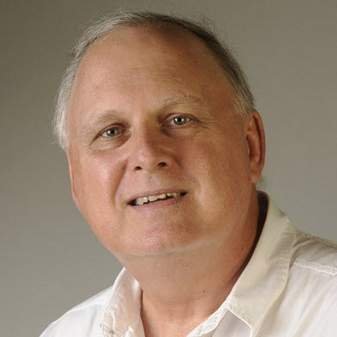 Tim Bryce is a writer and the Managing Director of M&JB Investment Company (M&JB) of Palm Harbor, Florida and has over 30 years of experience in the management consulting field. He can be reached at timb001@phmainstreet.com
For Tim's columns, see: timbryce.com
Like the article? TELL A FRIEND.
Copyright © 2015 by Tim Bryce. All rights reserved.
NEXT UP: IS AMERICA TOO BIG TO SUCCEED?- Is this as good as it gets?
LAST TIME: WHY WE NEED A MIDDLE CLASS - An argument for capitalism.
Listen to Tim on WJTN-AM (News Talk 1240) "The Town Square" with host John Siggins (Mon, Wed, Fri, 12:30-3:00pm Eastern); WZIG-FM (104.1) in Palm Harbor,FL; and KIT-AM 1280 in Yakima, Washington "The Morning News" with hosts Dave Ettl & Lance Tormey (weekdays. 6:00-9:00am Pacific). Or tune-in to Tim's channel on YouTube.


 Do people truly understand the power of the middle class? I think they're starting to overseas. We may not have invented the concept of a middle class, but we sure perfected it, and everyone wants to emulate it. Since the fall of the Soviet Union, countries around the world have been reconfiguring their economic policies in order to remain competitive in a global economy. In case you haven't been paying attention, new middle classes have slowly emerged in such places as China, Belarus, Brazil, Russia, Vietnam, and amongst South African blacks. People in these countries now have spending power thereby causing a demand for products and services, not to mention a call for construction of new houses and businesses.
 The protection of intellectual property should be a significant concern to all Information Technology organizations. Without protection, commercial hardware/software vendors would quickly evaporate as others would inevitably steal their designs and programs. Corporate developers would also suffer if their ideas, inventions, and programs were misappropriated thereby causing them to lose their competitive advantage. In fact, our corporate landscape and standard of living would be radically different if we had no such protection. Fortunately, the framers of the U.S. Constitution were wise enough to implement legislation safeguarding the authorship and ownership of literature, art, and inventions, thus causing the United States to flourish in the arts and sciences. But the advent of the computer caused us to reconsider how we safeguard such property. For example, the concept of a computer program has been a bit nebulous to some people; should the source code be protected by copyright? What about the object code (executable)? Attorneys have been debating this subject over the last thirty years and there is still general confusion in the field.
 "Musick has Charms to sooth a savage Breast,
  After seeing so many marriages end in divorce, you cannot help but wonder why couples get married in the first place. Maybe they see it as some kind of legal permission slip to do nothing more than to have sex. If so, that seems to be rather shallow thinking to me. I tend to believe most people get married to quell the biological clock in their heads to reproduce. Under this scenario, husband and wife are doomed to failure after their mission has been fulfilled. There are probably dozens of reasons for getting divorced, but regardless, I think most people go into marriage with impractical expectations and hidden incompatibilities that are slow to surface.
 Regardless of how the liberal media and Democrats try to portray the invincibility of Secretary Hillary Clinton as candidate for president of the United States, she can certainly be beaten. She has many weaknesses, one of which is the myth that it is "her turn" to be president as touted by her supporters. Obviously, presidents should be elected based on qualifications, not turns, but these are strange times we are living in and her supporters are willing to overlook her dismal record.
 Now and then, I am asked about our corporate slogan, "Software for the finest computer - the Mind" which we have used since our company's inception in 1971. "What does it mean, where did it come from?" I am asked. At first, it was used in connection with our "PRIDE" methodology for system design. There was nothing remotely like it on the market at the time. Consequently, people asked my father, Milt Bryce, what it was, "Is it hardware or software?" Recognizing their confusion, he said, "It's neither, actually it is software for the finest computer - the Mind," meaning it provides instructions so people could build information systems. At first, "PRIDE" consisted of nothing more than some manuals and forms for people to follow during system design. When asked what language it was programmed in, we said "English," which amusingly confused the techies. Later we added computer software to help expedite the methodology, but make no mistake, "PRIDE" is a thinking process, a way of looking at systems and how to build them. Since then, the expression has gone on to represent other aspects of management and life in general, which is why I use it in my writings.
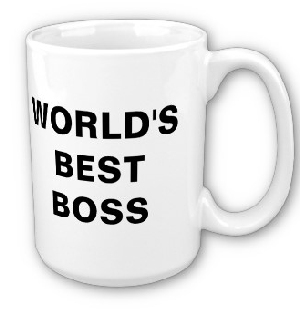 I find it rather amusing when people start touting their products as the "world's best" or "world's finest." Such boasts are usually self-proclaimed and are not based on some independent person or group to impartially judge the products. In fact, such superficial claims detract from the company's credibility as opposed to adding to it. For example, try an Internet search on "World's Best (whatever)" and you'll undoubtedly run into more opinions than facts.
 At the August 6th GOP presidential debate in Cleveland, and the ensuing fallout, it became clear the press had declared war on Donald Trump. They simply do not want him in the electoral mix as his roots are planted in business as opposed to politics. Calling it a "debate" is being much too generous. Rather, it was a modified version of a press conference where candidates field questions from the media. In a debate, a moderator coldly presents a topic and a speaker poses their argument, followed by a counter argument by an opposing person. This is not what happened during the debate where Fox moderators offered sensational questions and were not interested in discussing legitimate topics, such as how to stimulate the economy and GDP, what our policy should be in the Middle East, how we should attain energy independence, a discussion on diminished morality, race relations, our space program, etc. In contrast, the
 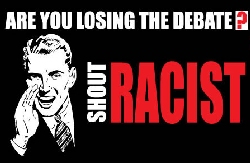 Often considered the touchstone of a person's perspective on life, the word "racist" has been so overused, it has become the punchline for jokes and in danger of losing its validity. The word is as overused and abused as the word "technology" which seems to be applied to everything. The word "racist" was originally created to describe a person who believes a particular race is superior to another. However, it has morphed into something used outside of race, such as when discussing political or religious inclinations. In other words, it has gone way beyond the color of a person's skin. For example, consider how Black Liberals treat Black Conservatives. It is no longer just about the color of your skin, it is also the politics you observe.
 We hear a lot these days about the deterioration of ethics in business, e.g., graft, corruption, cheating, favoritism, skimming money, etc. This has resulted in a public relations nightmare for business. If consumers do not trust a company, its a matter of time before it goes out of business. This is supported by recent studies providing evidence there is a correlation between business performance and ethical practices (see the
  I've noticed profanity has become a natural part of the teenager vernacular lately, perhaps excessively so. I know teachers and parents who are very much concerned with this and are at a loss as to how to handle it. In my school days, we were all well aware of the words but knew better to use them in the presence of adults as schools still practiced corporal punishment back then. If you got out of line, you weren't just sent to detention, you were swatted with a paddle.