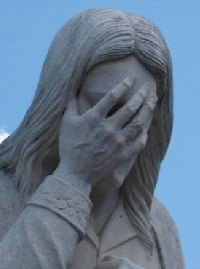
 I don't want to sound like Scrooge or the Grinch, but Christmas is not one of my favorite holidays. I see it more as something for the kids as opposed to adults. Before I get started though, I want to make something perfectly clear; I still refer to this season as "Christmas" as opposed to the "Holidays" which may sound more politically correct, but to me it's an admission that Christians are in retreat in this country. I am not a super-religious person mind you, but it bothers me that we have turned the celebration of Christ's birth into a marketing bonanza. To illustrate my point, consider the following:
* We spend millions on lights and decorations around the house as opposed to investing in our planet and conserving energy resources.
* Instead of helping the less fortunate, we give opulent gifts to people who really do not need them. Last time I checked, there are still places in the world where people are sick and hungry, and need an education or a roof over their heads.
* As opposed to trying to replenish our forests, we kill trees to do nothing more than decorate our homes for a few scant days.
* Instead of promoting Christ's words of peace, we are still at war with ourselves, particularly at the checkout counter.
If this has all changed, I must have missed the memo on it.
In the workplace, we exchange superficial gifts more because we feel we have to rather than because we want to. I would much rather have a heartfelt handshake than most of the gifts I have received in the office. But then again, this probably isn't politically correct either. I have even seen people compete over who is going to give the most extravagant gift to someone for political purposes as opposed to the generosity of their heart.
It is also customary to hold office parties this time of year, much to the delight of caterers, restaurants, hotels, entertainers, etc. But I wonder if the substantial money expended here would be put to better use by rewarding the employees with a bonus instead.
Following Thanksgiving, the media immediately shifts its programming into the Yule tide swing with Christmas music on the radio, and specials on television. It seems a little like brainwashing to me to force you into the Christmas spirit weeks before the actual holiday. I'm sorry, but I don't like being coerced into anything.
I wonder what Jesus would say about all of these shenanigans. First, he would probably wonder who the jolly fat guy was in the red outfit. I imagine he would tell us that we all have our priorities wrong. I can even hear him say, "Hey guys, you even got the day wrong!"
If Jesus were to come back, I'd bet he would be kidnapped by the marketing people for at least the month of December, maybe longer.
With this said, I sincerely wish everyone, be you a Christian, a Jew, a Muslim, or whatever, a very merry Christmas, not because I'm trying to force my religious beliefs down your throat, but because I genuinely wish you Peace on Earth, good will toward men. Maybe I do have the Christmas spirit after all.
Keep the Faith!
Note: All trademarks both marked and unmarked belong to their respective companies.
 Tim Bryce is a writer and the Managing Director of M. Bryce & Associates (MBA) of Palm Harbor, Florida and has over 30 years of experience in the management consulting field. He can be reached at timb001@phmainstreet.com
Like the article? TELL A FRIEND.
Tune into Tim's THE BRYCE IS RIGHT! podcast Mondays-Fridays, 11:30am (Eastern).Copyright © 2010 by Tim Bryce. All rights reserved.


 I was making a sandwich the other day, and as I opened a loaf of bread I observed the heel customarily unclaimed by other members of the family. I, of course, took it to build my sandwich. Only then did I stop to think how many times I had done this over the years as my family seems to have an aversion to eating the heel and, consequently, it was always earmarked for my consumption exclusively. It's not that I relish eating the heel, I just don't want to see it go to waste. I then started to think about the other attributes that distinguish fathers. For example:
 The following is an excerpt from my book,
  The snowbird migration is in full swing down here in the South. This is where northerners, predominantly retirees, make their annual trek to Florida to spend the winter. Their money is particularly needed as Florida's economy is still reeling from the recession and we have high unemployment. Nonetheless, there is a price to be paid for having our neighbors from the north flock down here.
 When you discuss concepts like the speed of time, people like Einstein and Newton come to mind who would have you consider such factors as space, light, gravity, and other elements from physics and mathematics. This my be so, but in human terms, time is measured by experiences and memories. And, Yes, time does indeed speed up and slow down. I believe we can all agree on this.
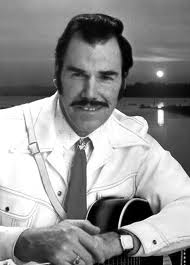 Back in the late 1970's/early 1980's the American public was barraged with a series of television commercials that baffled most of us. We didn't know it at the time, but these were probably the first "infomercials," something we were unaccustomed to. There was Zamfir, "The Master of the Pan Flute" who, we were told, was incredibly popular in Europe. The only problem was that nobody in North America had ever heard of him. Next, came Rula Lenska, a Romanian actress from the U.K. who was hawking Alberto VO5 hair products. Again, nobody in this country had ever heard of her. Even Johnny Carson asked, "Who the hell is Rula Lenska?" Finally, a yodeling country singer asked us to buy his "greatest hits" album which was allegedly more popular in Europe than the Beatles and Elvis. The singer's name, Slim Whitman. Because of their claim of notoriety in Europe, these three personalities became the butt of many jokes and the American public was reluctant to take them seriously. Nonetheless, they persevered and kept touting their products over the airwaves night and day.
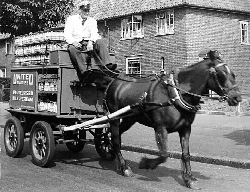 Within any company or organization, there is at least one person managers count on time and again to get a particular job done. Such a person is commonly referred to as the "Work Horse" of the group, the "Go-to guy" or the "Iron Man." Such a person is not necessarily the smartest or most physically endowed, but can be counted on to see a task through to completion based on sheer will and determination, something we used to call "dedication." The Work Horse may not be a thoroughbred, but possesses certain talents and strengths we find vital for running a company. Without such people, companies tend to flounder, thereby they should be prized and coveted. Quite often they are not, unfortunately.
 This may be hard to believe, but I suffered from shyness when I was young. The idea of speaking in front of a group of people or meeting strangers was just plain scary to me. So much so, I refused to sit on Santa's lap at the department store during the holidays. When I was a kid, my father would love to give tours of our house and introduce my brother and myself to guests while we were relaxing in the back of the house (which we thought was a safe haven; it wasn't). My father did this so many times that we eventually took to hiding in closets when we heard him coming down the hall on one of his many tours. It always baffled him why he couldn't find us. I can still hear him say, "And here are my sons who are...Gee, where did they go? They were here just a minute ago..."
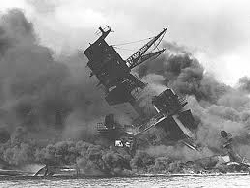 It's Pearl Harbor Day, a day we set aside in America to commemorate "a date which will live in infamy," December 7th, 1941, when the Imperial military forces of Japan bombed military targets in Hawaii or, as many called it, a "sneak attack." Today, in the 21st century where 9-11 is fresh in our memory, the Pearl Harbor attack is quickly fading into obscurity as the "greatest generation" fades away with it. I'm afraid 9-11 is superseding December 7th, just as the Pearl Harbor attack superseded "Remember the Maine" in 1898. All were unfortunate disasters, and I don't want to say one is better than another, but it would be unfortunate if we forgot the important lessons they taught us, particularly December 7th.
 I remember Ronald Reagan's televised farewell address in 1989 as if it were yesterday. It was touching, it was encouraging, and it was patriotic. There was one thing missing as far as I was concerned: a final plea for enacting a balanced budget and line-item veto, or at least a warning of the consequences for failing to enact such a law. Alas, I was greatly disappointed when neither a plea or a warning was included in the address. I'm told every state except Vermont has a balanced budget amendment and all but a small handful of states provide for a line-item veto, Vermont included (it kind of makes you wonder what those Green Mountain boys are up to).
 As many of you know, I have never been a big fan of cell phones, particularly as people use them when driving their cars. My loathe for them was such that I vowed to be the last man on the planet to own one. Well, after seeing countless housewives in the grocery store talking on them, the multitude of idiots using them in cars, kids on tricycles, the homeless gabbing away, even prisoners using them, and finally seeing nobody else in line ahead of me, I finally succumbed and acquiesced to get one. Actually, my wife got it for me as she was frustrated in tracking me down and felt it was time to bell the cat.
 A few things recently got me thinking about the American propensity to "leap before we look." The recent Gulf of Mexico oil disaster and the Health Care Bill (aka "Obamacare") are two good examples of fatal deficiencies in our ability to plan. In terms of the Gulf disaster, I was stunned we had no contingency plan as a lot of other countries do. We were simply unprepared for such disasters. Obamacare was different though; instead of taking the time to prepare a full feasibility study, as is customary in the business world, some cockamamie bill was cooked up in a back room in Washington and shoved down our throats. It's no small wonder people revolted against it. This is a prime example of short stroking the planning process and rushing to implementation. The excuse often is, "We don't have time to do it right." Translation: "We have plenty of time to do it wrong," thereby creating more problems with the program than it cures. This is precisely what we now have with Obamacare, a mess. Don't get me wrong, I believe there are probably shortcomings and problems in our current health care system, and we could probably do more to help others, but how Obamacare was produced was plain and simply wrong and consequently Congress and the President wasted a lot of time rearranging the deck chairs on the Titanic.